Chess Tattoo on the Forearm: Size, Style & Placement
Chess tattoo on the forearm: pain level, ideal size, matching styles and aftercare tips — everything to know before your appointment, with design examples.
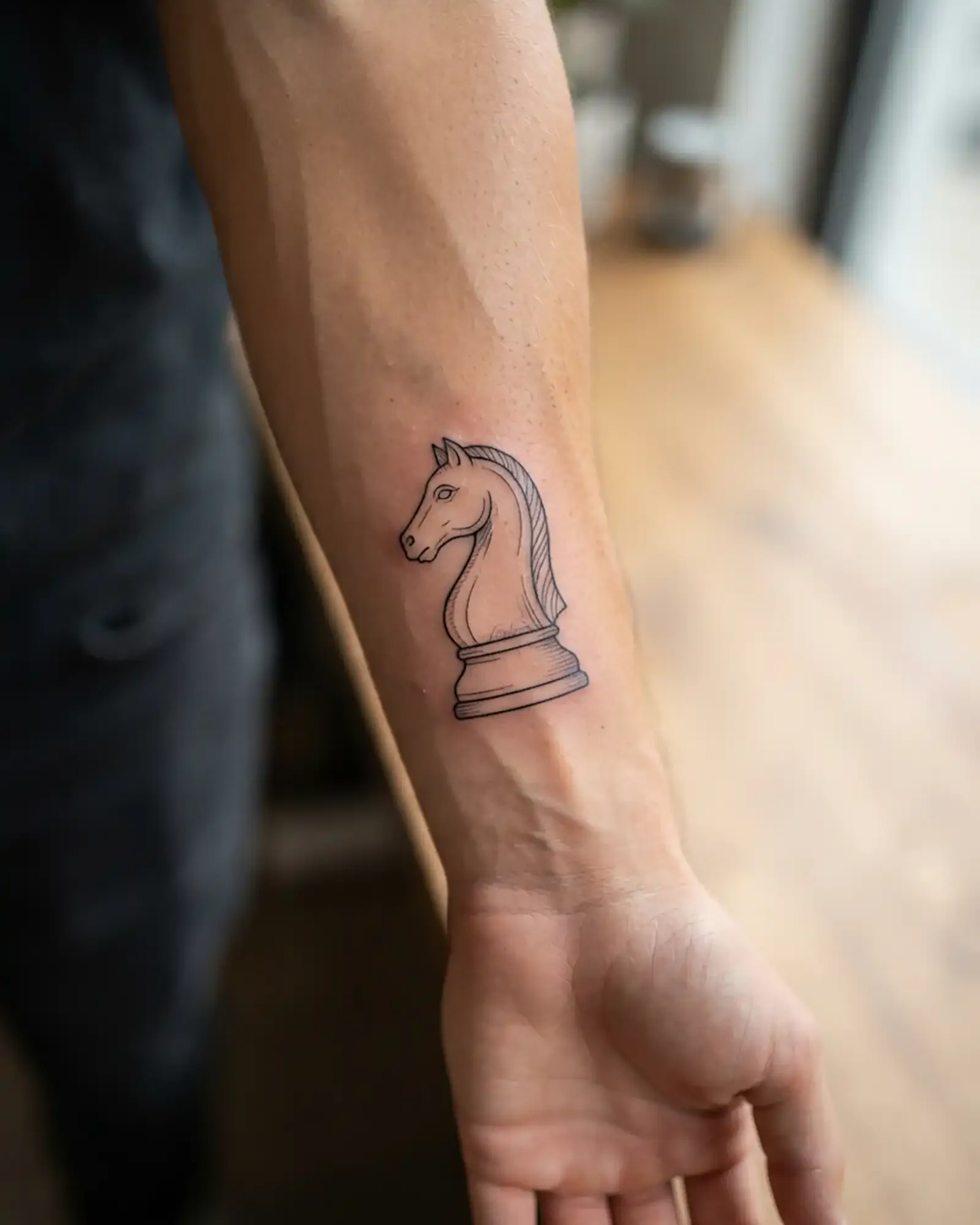
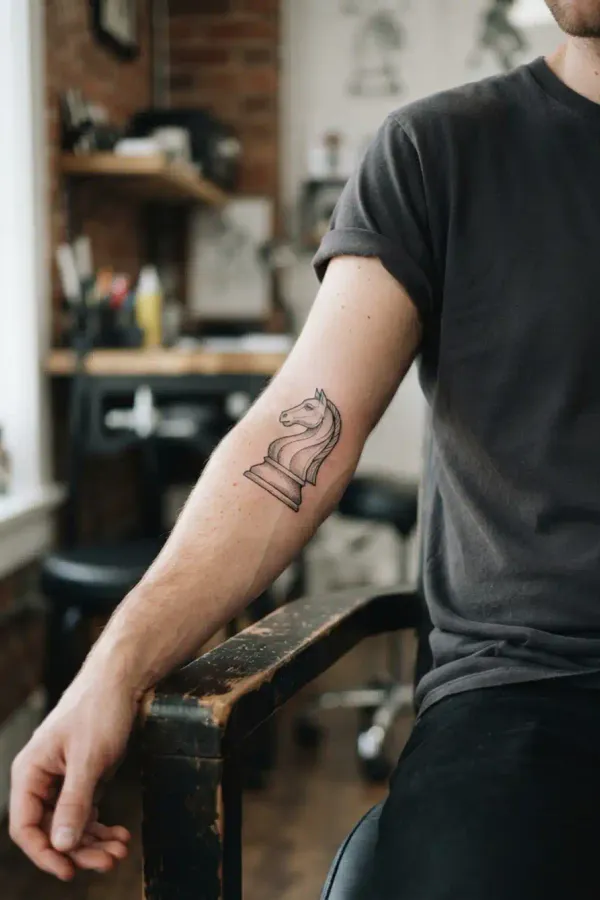
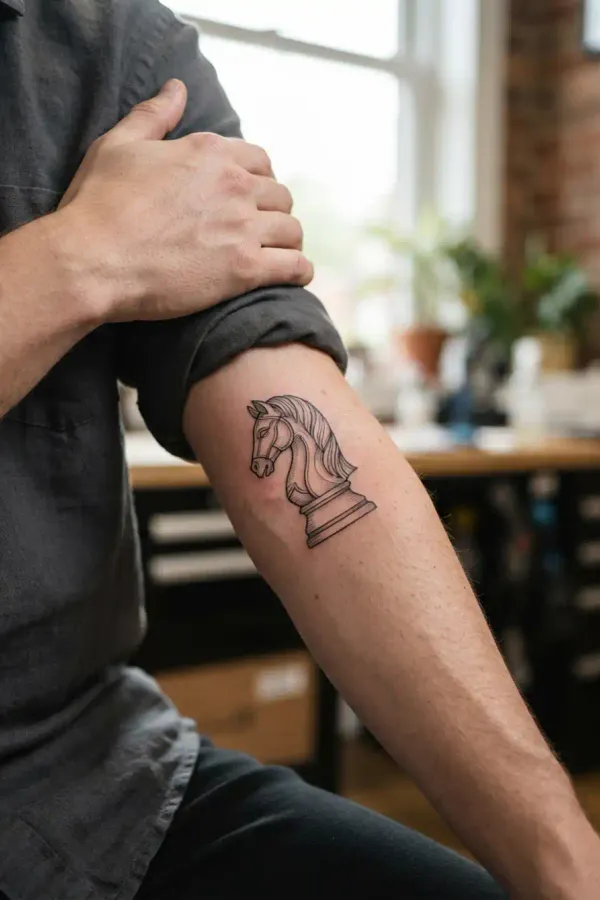
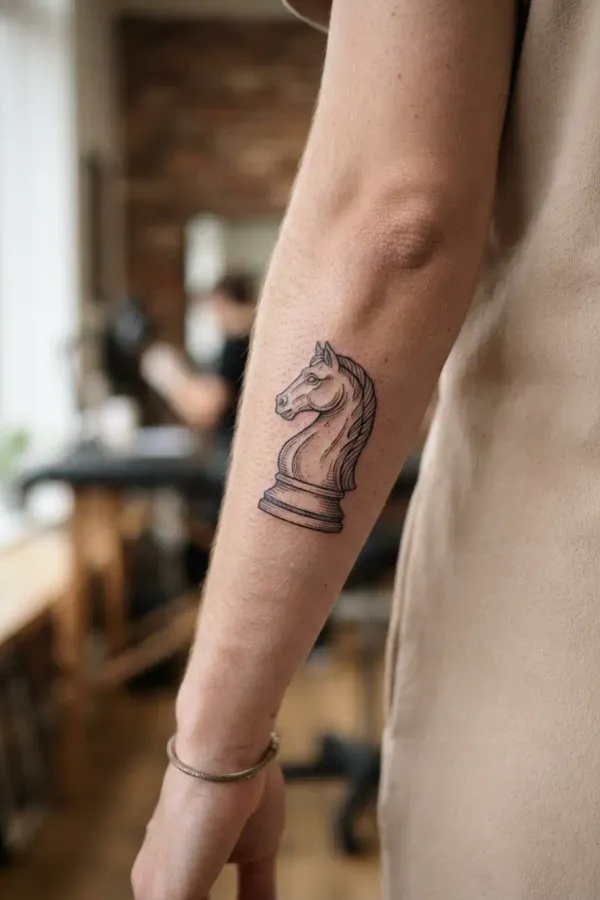
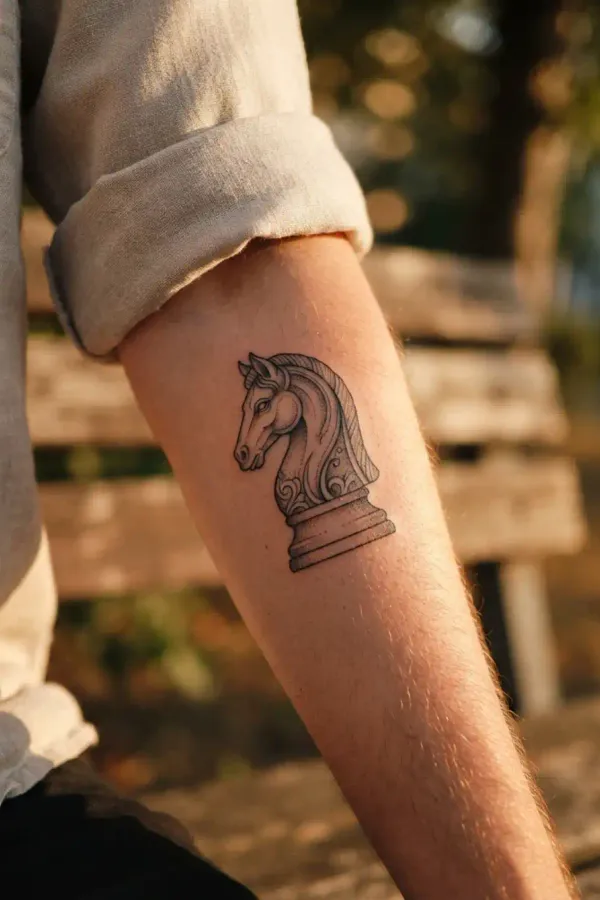
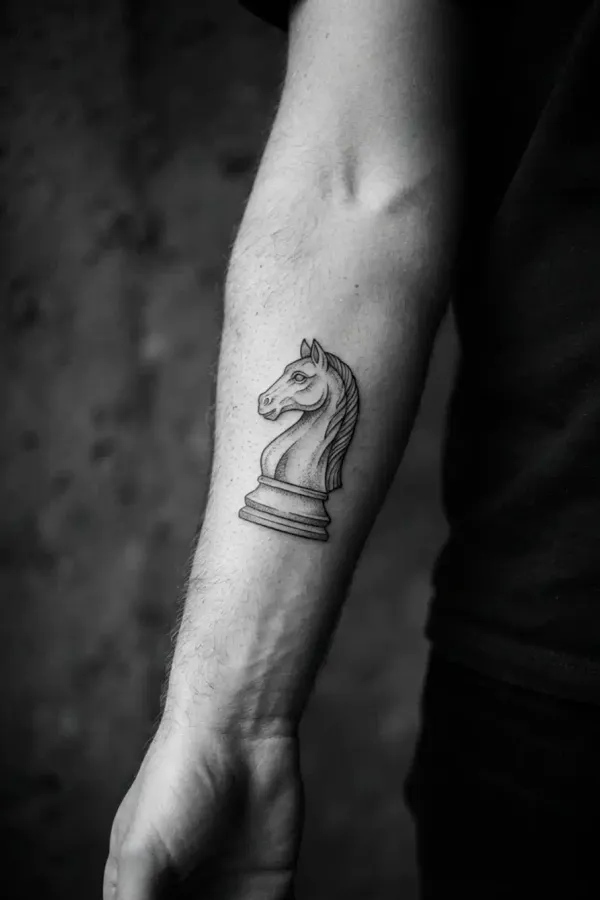
The forearm is, by a wide margin, the most popular placement for chess tattoos — for good reason. It offers enough surface area for detail, is easy to show off or cover up with a sleeve, and healing is usually straightforward. Here’s everything worth knowing before your appointment.
How painful is a chess tattoo on the forearm?
The forearm is one of the less painful spots for tattoos. The skin sits over muscle rather than directly over bone, and there are comparatively few nerve endings close to the surface. The inner forearm is marginally more sensitive than the outer forearm, but both stay very manageable — even for a first tattoo.
What size works on the forearm?
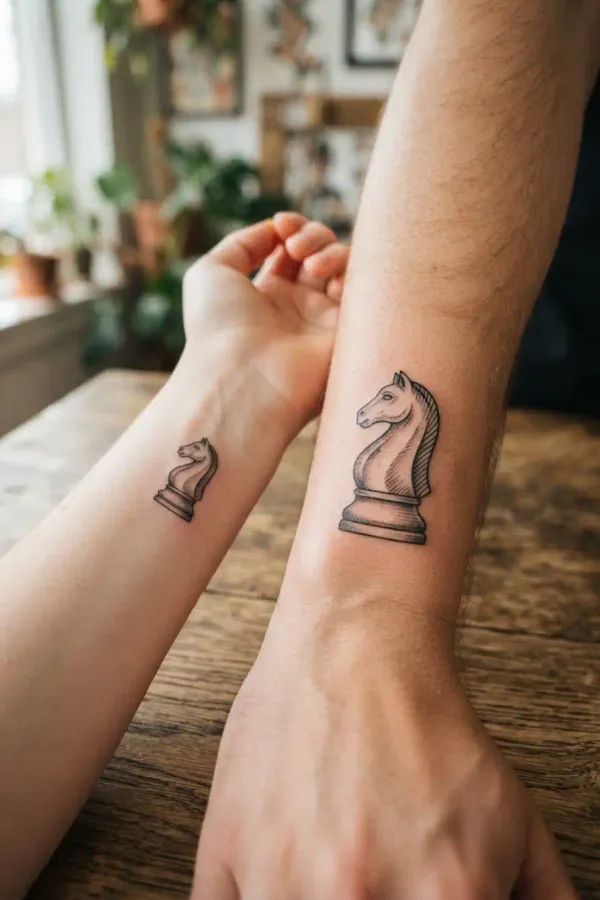
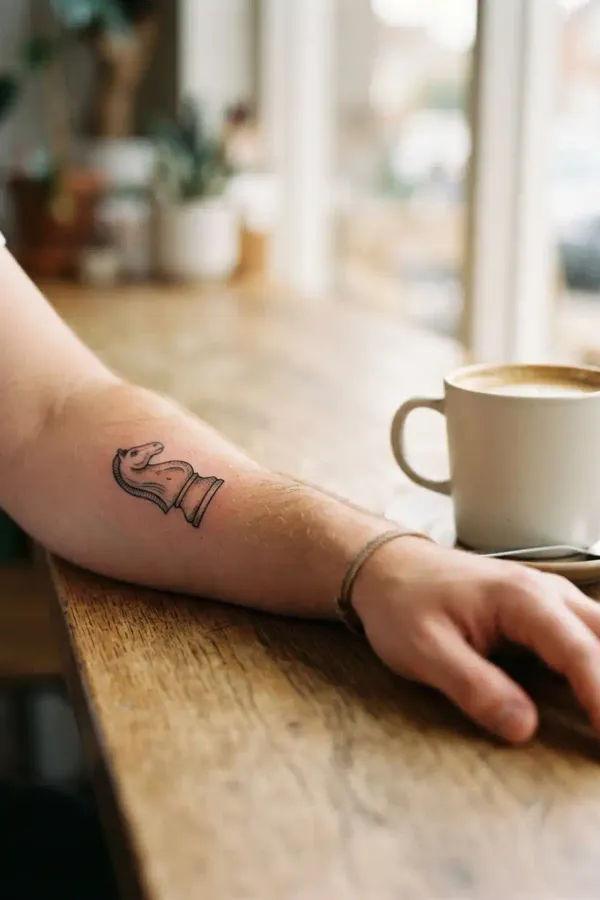
The forearm is versatile: a reduced chess motif like a single knight works from as small as 5–6 cm, while more detailed designs — a piece paired with a symbol like a compass or fortress wall, for example — benefit from 8–12 cm so the fine lines don’t blur together over time (see the size-comparison shot above). For a bigger statement piece, the entire forearm can become the canvas, for instance with a scene featuring several pieces.
Which style works best?
Every major style translates well to the forearm:
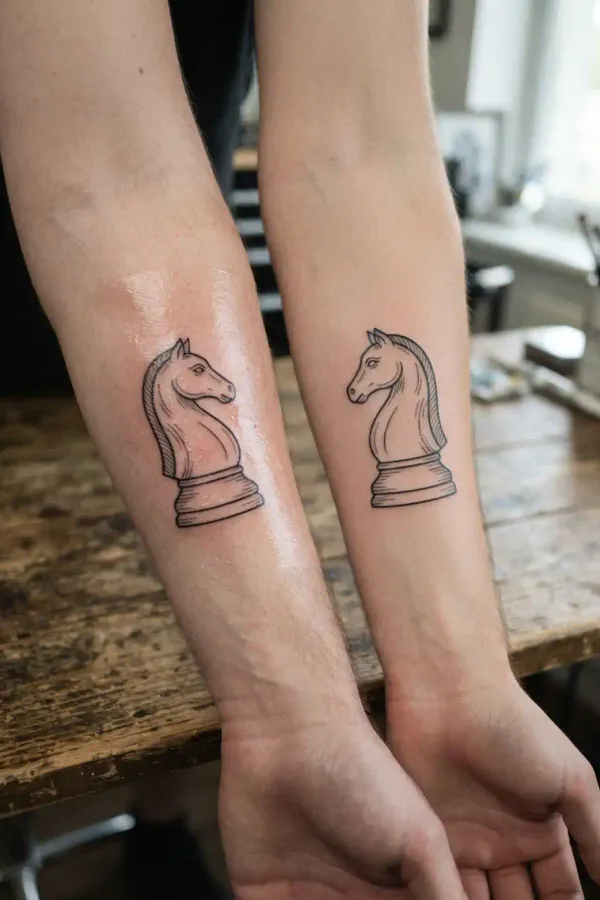
- Fine-line — the most common choice, especially for single pieces or piece-and-symbol combinations.
- Blackwork — high contrast, tends to age particularly well on the forearm thanks to its relatively even surface.
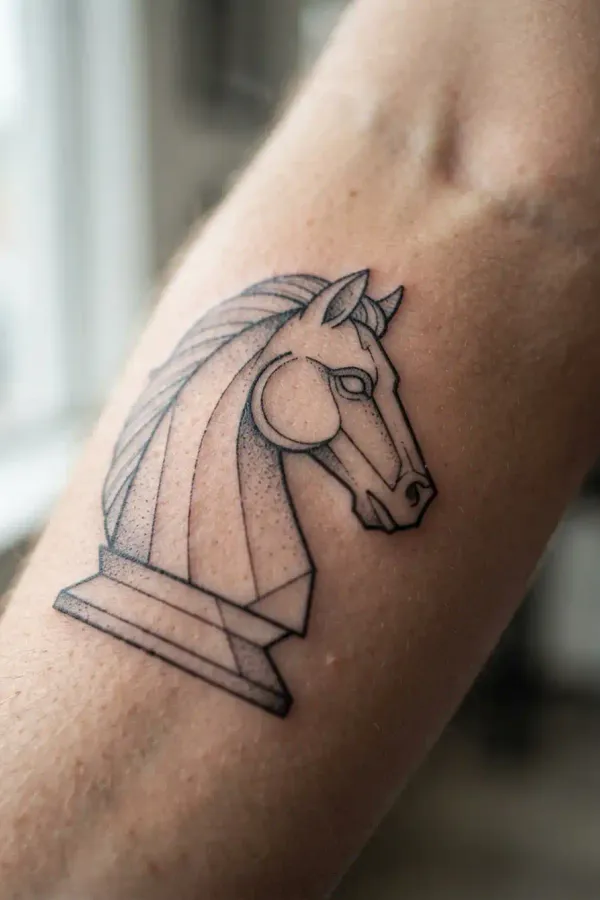
- Geometric or dotwork — both benefit from the forearm’s larger, consistent surface area for their detail work.
More style examples are in our design gallery.
Visibility in everyday life
The forearm is one of the most visible standard placements — an important consideration if your workplace restricts visible tattoos. The inner forearm is easier to cover with long sleeves than the outer forearm, which often stays visible even in short sleeves.
Healing and aftercare
Healing on the forearm typically takes 2–3 weeks for the surface layer, with full healing at around 4–6 weeks. Since the forearm regularly comes into contact with sleeves, loose, breathable clothing in the first week helps avoid friction on the fresh tattoo.
Frequently asked questions
Does a chess tattoo on the forearm hurt a lot? No — the forearm is one of the less painful spots, since the skin sits over muscle rather than directly over bone.
What’s the minimum size for a chess tattoo? For a single reduced piece, 5–6 cm is enough. For combination motifs with more detail (piece + symbol), aim for at least 8 cm.
Can I easily cover a forearm chess tattoo? Yes, especially on the inner forearm — a long-sleeve shirt usually does the job. The outer forearm, on the other hand, often stays visible even in short sleeves.
Find design ideas for the forearm in the gallery, and read more about individual piece meanings in our symbolism guide.
Placement & Style: More Designs to Explore
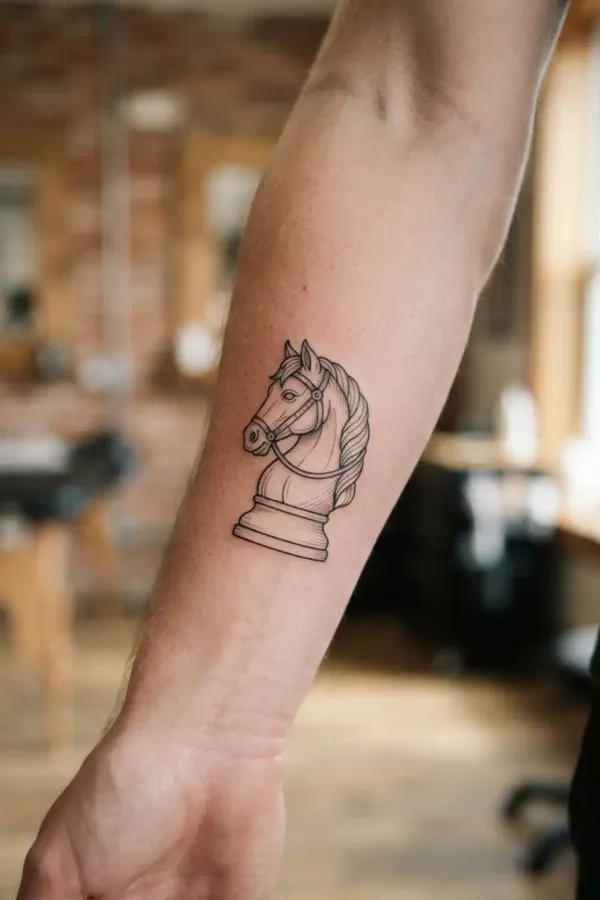
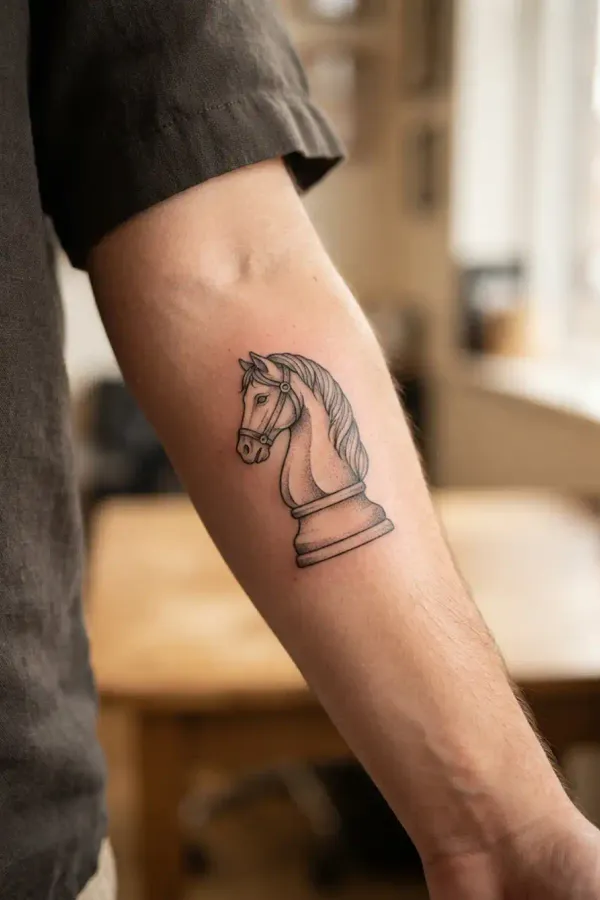
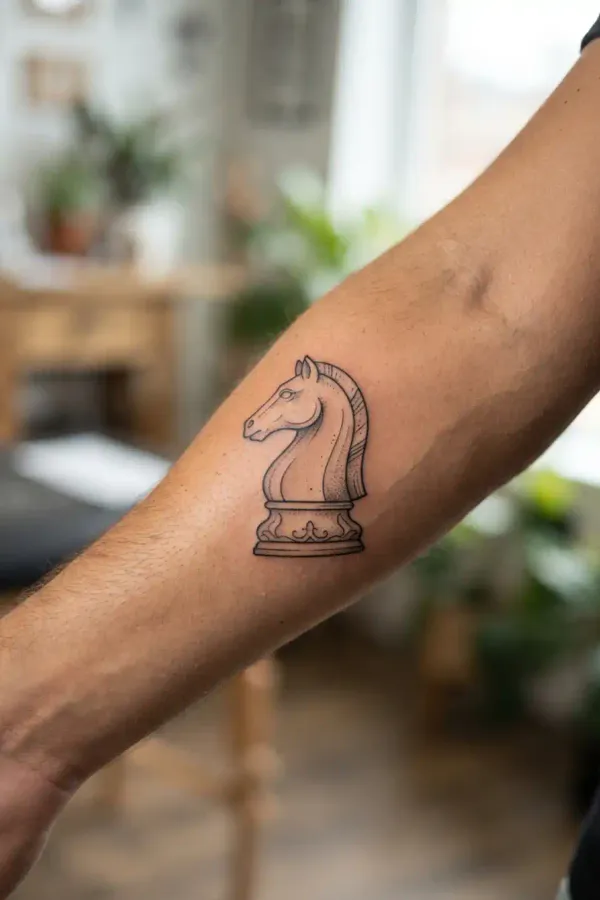
Each design is optimized as its own pin image — save your favorites straight to Pinterest.
You might also like
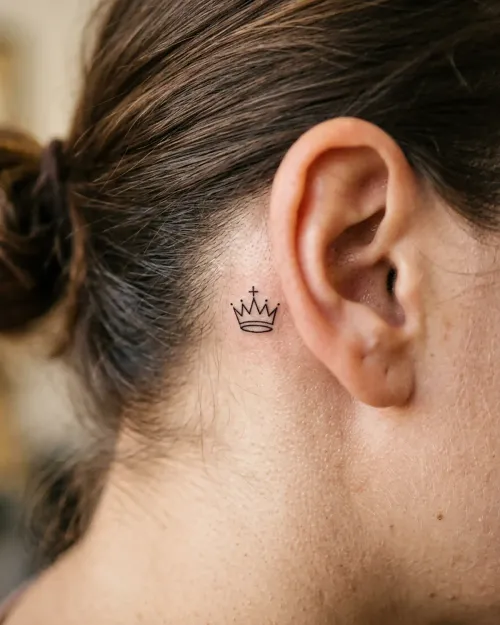
Chess Tattoo Behind the Ear: Discreet & Elegant
Chess tattoo behind the ear: pain level, ideal size, everyday visibility and aftercare notes for one of the most discreet tattoo placements.
Read more →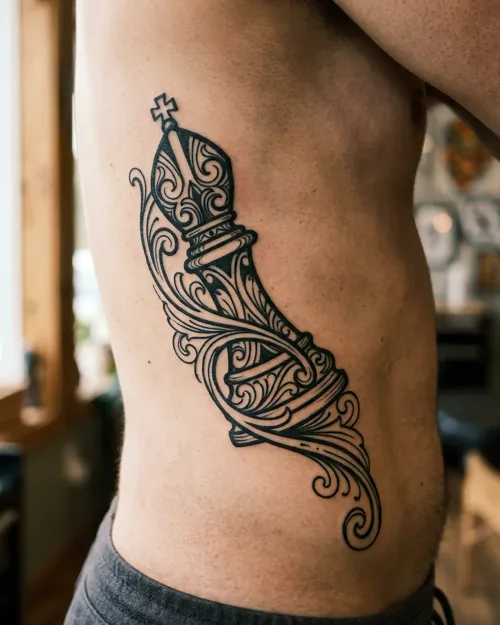
Chess Tattoo on the Ribs: Bold & Flowing
Chess tattoo on the ribs: pain level, healing time, ideal size and design tips for one of the most intense but expressive placements.
Read more →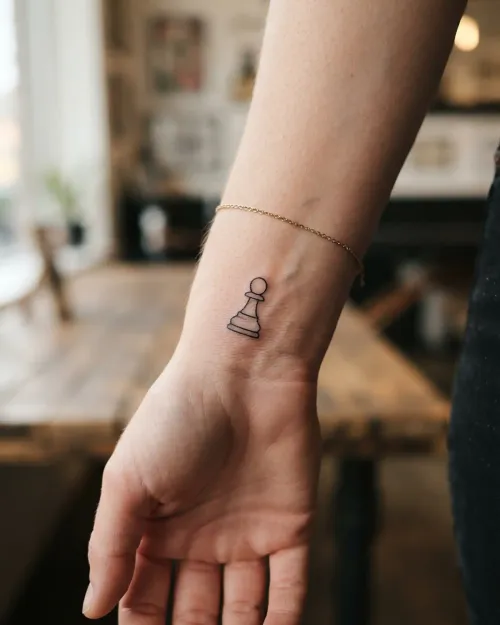
Chess Tattoo on the Wrist: Small but Powerful
Chess tattoo on the wrist: pain level, longevity, ideal size and design tips for the most popular placement for small, understated motifs.
Read more →